

Nucleus OnePot PURE workshop
Abstract
The PURE system typically require 9 months to 2 years for researchers to build from scratch. We organized a five-day workshop where eight participants from three continents built complete OnePot PURE systems using open protocols. Three of four components (energy mixes, tRNAs, ribosomes) performed comparably to commercially-available benchmarks, while protein mixtures showed minimal activity due to buffer contamination. A “poisoning experiment” revealed 1μL of participant preparations reduced activity of commercially-available PURE by 90-95%. Through real-time collaborative analysis and systematic troubleshooting, participants gained practical skills and confidence to recreate PURE systems in their home laboratories, representing a significant step toward democratizing cell-free synthesis platforms for synthetic biology applications.
This DevNote represents work performed in an intense workshop environment. All conclusions are preliminary and laboratory procedures may deviate from referenced methods or may otherwise be missing entirely.
Overview:
On May 12, 2025, eight participants gathered at Nucleus Labs in San Francisco to build Nucleus OnePot PURE systems from scratch. Over the course of the workshop, participants gained hands-on experience preparing each core component: energy mixes, protein mixtures, tRNAs, and ribosomes.
Beyond technical instruction, this workshop served as a demonstration of Nucleus Open Science practices. Data from daily experiments was collected into a collaborative Nucleus Hub workspace and analyzed in real time, allowing results to be rapidly incorporated into shareable Developer Notes with participant commentary and insights.
As organizers of this first-of-its-kind workshop, we learned a great deal along the way. We discovered effective approaches for introducing wet-lab biologists to Jupyter-deployed Python analysis tools and learned to adapt rigid schedules to the inherent unpredictability of biological experiments. We also attempted to capture the beauty of the process along the way Figure 1. As a wise person once remarked: “it’s not just about the PURE, it’s about the friends you make along the way”.
The following sections present key experimental data generated by participants alongside individual reflections on their workshop experience.
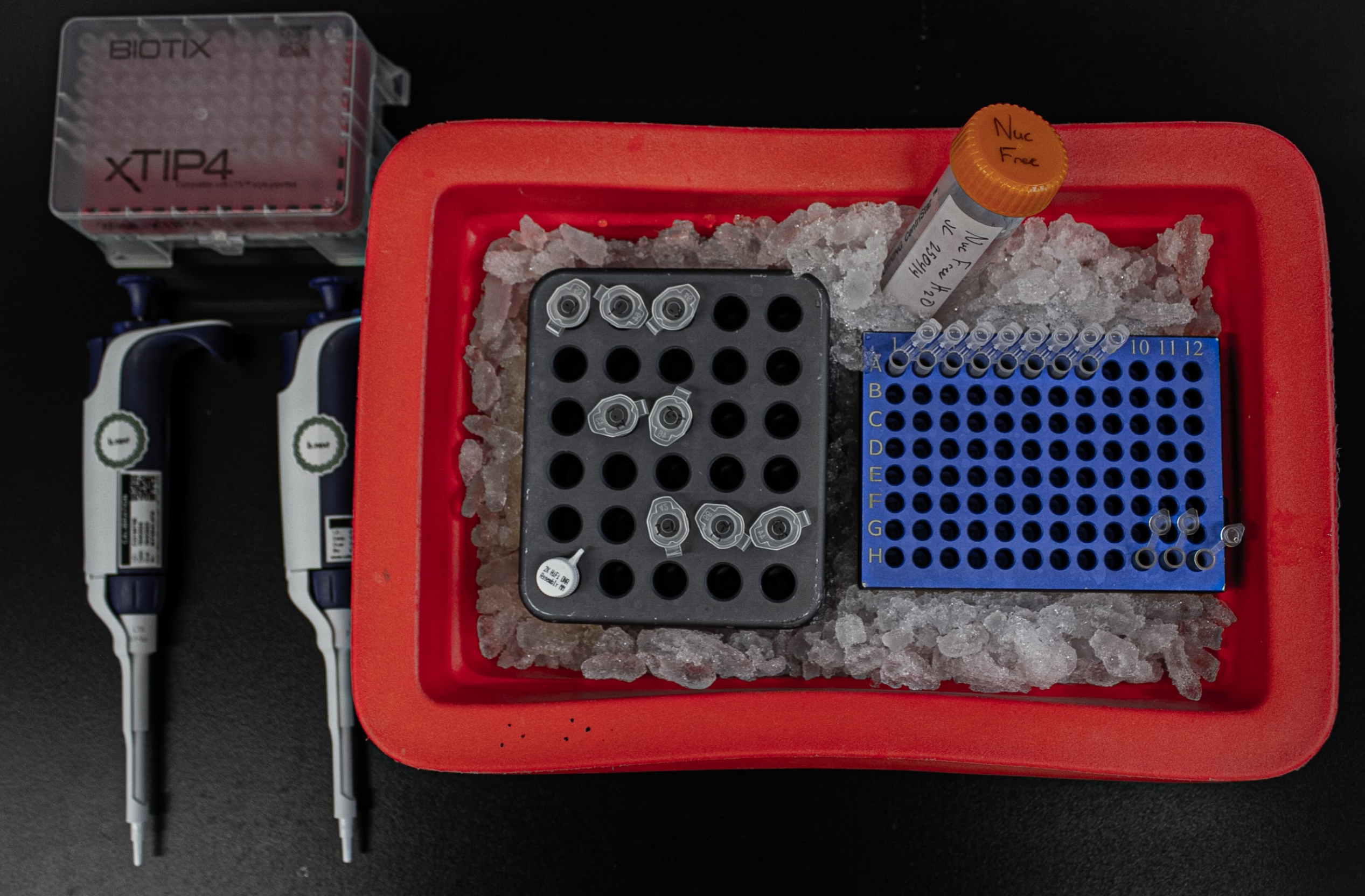
Figure 1:Mise en place of materials required for testing the PURE system.
Make energy mix
Participant Reflection Summary
Amino acid preparation was challenging but educational. Participants struggled with dissolving certain amino acids (especially tyrosine) and learned different resuspension methods through discussions with other attendees, gaining valuable hands-on experience with techniques they had only known theoretically.
The homemade energy mix underperformed expectations. Multiple participants noted that their small molecule/energy mix showed much lower activity than controls, suggesting formulation or preparation issues that weren’t fully resolved during the workshop.
While most participant-made small molecule mixes considerably underperformed the commercially-available control, at least one achieved >80% of its performance Figure 3. We therefore regard this as a successful outcome. This result highlights the variability that can emerge during reagent preparation. These differences may arise either during amino acid mix assembly or when combining the amino acid mix with other small molecules to create a functional small molecule mix.
Table 1:Description of experimental parameters.
| Name | Description |
|---|---|
| SM 1-9 | Workshop participant Small Molecule mix tested with NEB PURExpress Solution B, NEB E. Coli tRNA, and supplemented with Mg(OAc)2 |
| Positive | Standard NEB PURExpress reaction with plamGFP |
| Negative | Standard NEB PURExpress reaction without plamGFP |
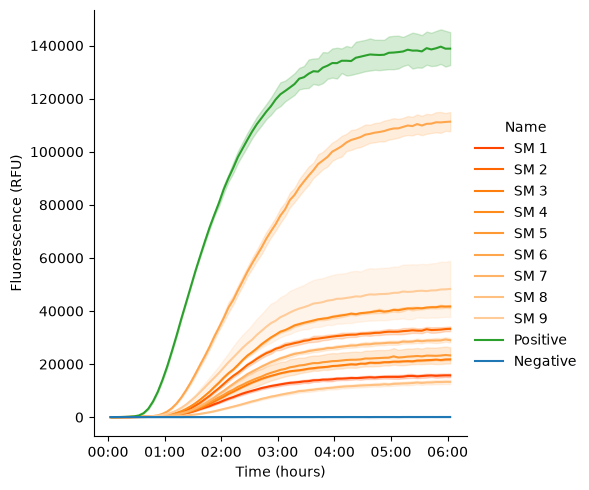
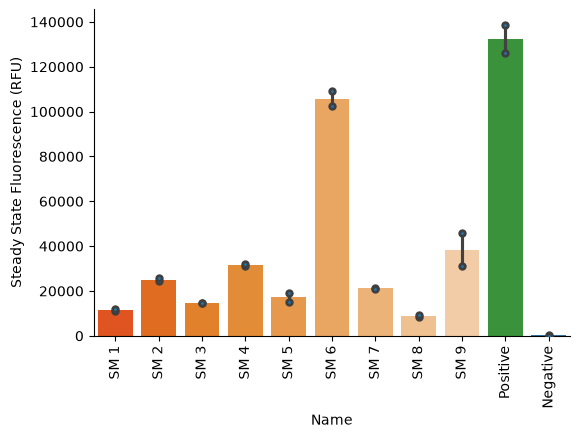
Characterization of small molecule mix produced by workshop participants.
Make protein mix
Participant Reflection Summary
Protein purification was technically challenging but educational for beginners. Many participants were doing protein purification for the first time and learned valuable techniques like gravity column methods, proper sonication protocols, and dialysis procedures, though the process took longer than expected.
Low protein yields and purity issues were major concerns. Participants observed consistently low yields and potential contamination problems, with discussions about the need for extensive washing, proper dialysis to remove imidazole, and the difficulty of assessing purity due to similar protein molecular weights.
All participant-made protein mixes significantly underperformed relative to commercially-available controls Figure 6. However, similar to observations made during small molecule mix preparation, there was considerable variation between participants.
Table 2:Description of experimental parameters.
| Name | Description |
|---|---|
| PM 1-9 | Workshop participant Protein Mix tested with NEB PURExpress Δ ribosome kit and NEB E. coli ribosomes |
| Protein control | NEB PURExpress Δ ribosome kit and NEB E. coli ribosomes |
| Positive | Standard NEB PURExpress reaction with plamGFP |
| Negative | Standard NEB PURExpress reaction without plamGFP |
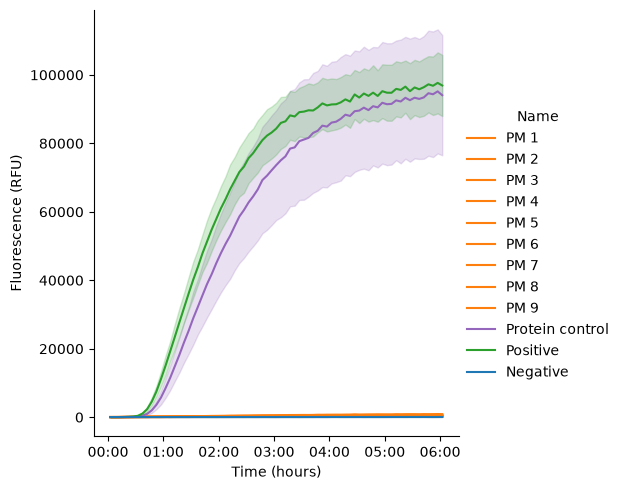
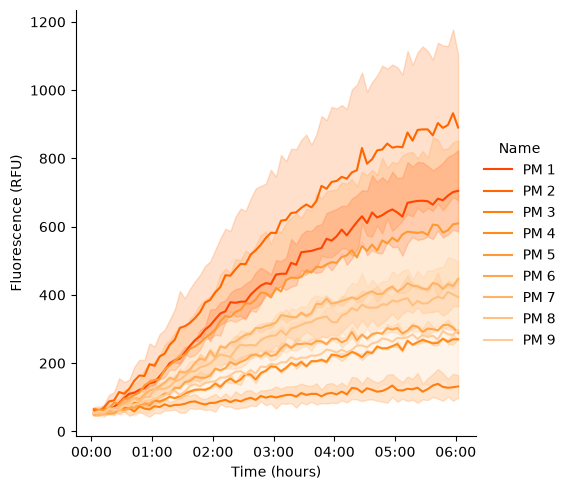
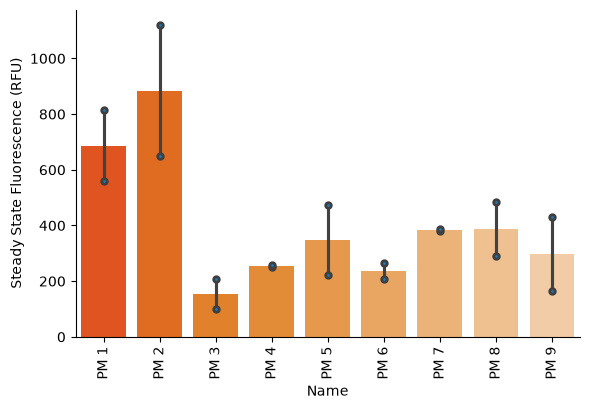
Characterization of protein mix produced by workshop participants.
Make tRNA and Ribosomes
Participant Reflection Summary
Hands-on experience with ribosome and tRNA preparation was highly valued. Participants were excited by the technical processes like ultracentrifugation to pellet ribosomes and phenol-based tRNA precipitation, gaining confidence in procedures they found initially intimidating while learning that some steps (like overnight tRNA dialysis) might not be necessary.
tRNA
Participant-made tRNAs outperformed the commercially-available tRNA control, though all samples underperformed relative to the positive control Figure 7. While PURExpress Δ (aa, tRNA) Kits typically achieve ~60% of standard kit performance, the results observed here were significantly lower (~30%). This reduced performance may be attributed to the additional care required when assembling PURE reactions from Δ (aa, tRNA) Kits, where amino acids, small molecule mix, and tRNA must be thoroughly mixed for optimal effectiveness. Despite this limitation, we conclude that the participant-made tRNAs performed better than the commercially-available control.
During the workshop, one participant suggested that dialyzing the tRNA after extraction was unnecessary. This hypothesis was tested, and we found that dialysis provided a modest improvement in tRNA performance.
Table 3:Description of experimental parameters.
| Name | Description |
|---|---|
| A19 tRNA (w/ dialysis) | PURExpress Δ (aa, tRNA) Kit with dialyzed workshop A19 tRNA |
| A19 tRNA (w/o dialysis) | PURExpress Δ (aa, tRNA) Kit with undialyzed workshop A19 tRNA |
| tRNA control | PURExpress Δ (aa, tRNA) Kit with NEB E. Coli tRNA |
| Positive | Standard NEB PURExpress reaction with plamGFP |
| Negative | Standard NEB PURExpress reaction without plamGFP |
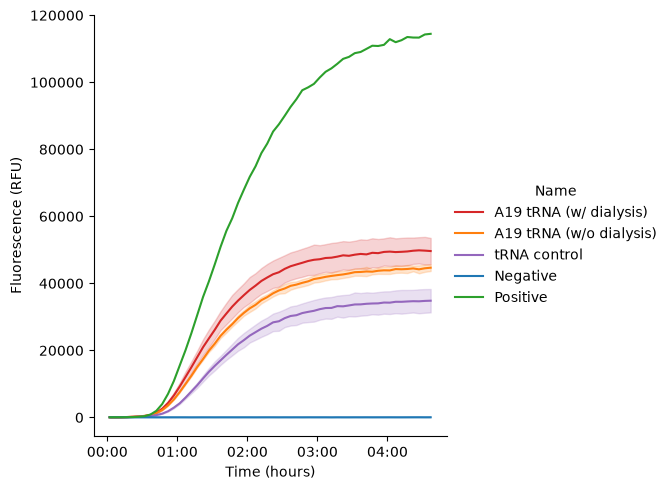
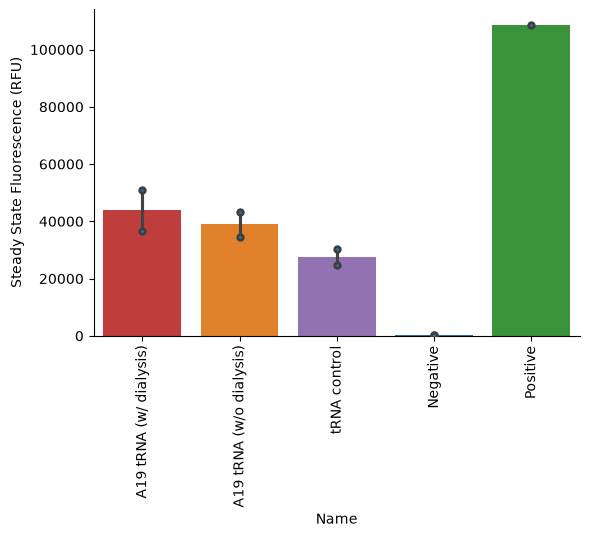
Characterization of A19 tRNA produced by workshop participants.
Ribosomes
Participant-made ribosomes performed comparably to the commercially-available ribosome control Figure 9. Consistent with our previous experience, NEB PURExpress Δ Ribosome Kits typically underperform relative to standard NEB PURExpress reactions. In this experiment, the platereader gain setting was inadvertently set too high, causing detector saturation within the first hour of measurement. Consequently, only endpoint data are presented here.
Table 4:Description of experimental parameters.
| Name | Description |
|---|---|
| Ribosome 1-4 | NEB PURExpress Δ Ribosome Kit with workshop partipant’s ribosomes |
| Ribosome control | NEB PURExpress Δ Ribosome Kit with NEB E. coli ribosomes |
| Positive | Standard NEB PURExpress reaction with plamGFP |
| Negative | Standard NEB PURExpress reaction without plamGFP |
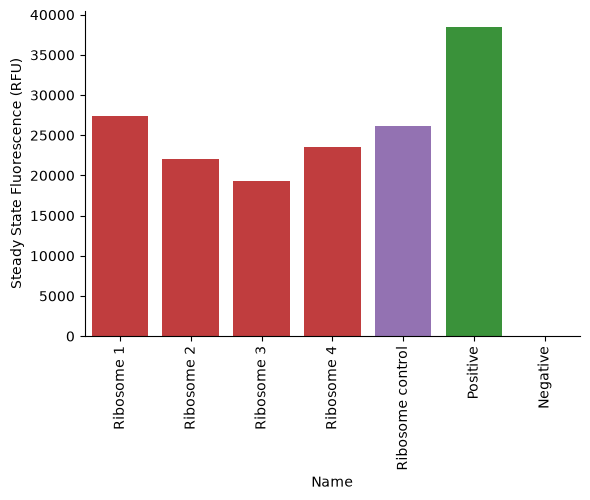
Debugging
Participant Reflection Summary
Buffer contamination was identified as the major culprit. The “poisoning experiment” dramatically demonstrated that just 1μL of their protein mix killed 90-95% of commercially-available PURE activity, revealing that buffer contaminants rather than protein quality were likely causing the system failures.
Dialysis showed promise for rescuing the system. Buffer exchange and dialysis of proteins led to noticeable improvements in activity, though still below commercially-available controls, suggesting this approach could be part of the solution along with potential magnesium optimization.
A massive collaborative experiment was executed to test all hypotheses. The team assembled their largest plate ever in a calm, collaborative effort, combining all the troubleshooting insights from the week into a comprehensive magnesium sweep and reagent comparison experiment.
Drop in Proteins
In an initial attempt to troubleshoot the participant protein mix, we hypothesized that a missing or underexpressed protein might be responsible for the reduced performance. To test this possibility, we supplemented the mix with several proteins that are either critical for transcription-translation or prone to underexpression, including arginyl-tRNA synthetase (ArgRS), T7 RNA polymerase (RNAP), initiation factor 2 (IF2), elongation factor thermo unstable (EF-TU), and various combinations thereof Figure 10. We used an unsupplemented workshop participant protein mix as a baseline control (PM 6 +) to which all spike-in proteins were added. While the addition of IF2 and EF-TU showed positive effects, the improvements were modest, suggesting that a missing protein, at least among those tested, was not the primary limiting factor.
Table 5:Description of experimental parameters.
| Name | Description |
|---|---|
| Definition: Spike-in Proteins | ArgRS (1306 g/mL), T7 RNAP (1164 g/mL), IF2 (5716 g/mL), EF-TU (6901 g/mL) |
| [Spike-in Protein] + x uL | x uL of the specified spike-in protein were added to a PURE reaction containing participant protein mix (PM 6), NEB PURExpress Solution A, and b.next ribosomes. All reactions have the same final volume. |
| Definition: Mixure | Same as spike-in protein experiment except combinations of proteins are added to the reaction headroom. |
| Mixture 1 | 0.5 uL T7 RNAP + 0.5 uL EF-TU |
| Mixture 2 | 0.5 uL IF2 + 0.5 uL EF-TU |
| Mixture 3 | 1 uL T7 RNAP + 1 uL EF-TU |
| Mixture 4 | 0.5 uL ArgRS + 0.5 uL T7 RNAP + 0.5 uL IF 2 + 0.5 uL EF-TU |
| PM 6 + | PURE reactions prepared from PM 6 with plamGFP |
| PM 6 - | PURE reactions prepared from PM 6 without plamGFP |
| Positive | Standard NEB PURExpress reaction with plamGFP |
| Negative | Standard NEB PURExpress reaction without plamGFP |
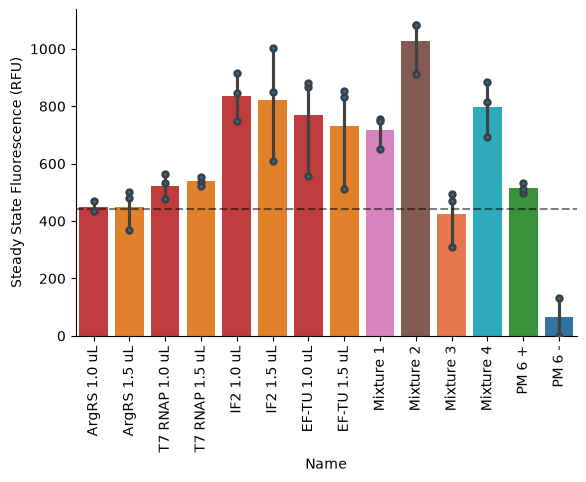
Figure 10:Steady state fluorescence measurements of PURE systems prepared from participant protein mix (PM 6) supplemented with different volumes of spike-in proteins and mixtures thereof compared with control reactions prepared from PM 6 as described in Table 5. Measurements are in triplicate and error bars represent standard error.
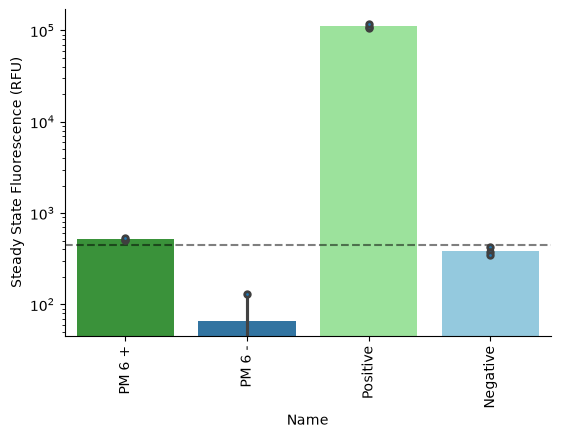
Figure 11:Steady state fluorescence measurements of PURE systems prepared from participant protein mix with (PM +) and without (PM 6 -) DNA encoding a fluorescent reporter compared against the equivalent reactions prepared from commercially-available PURE reagent kits as described in Table 5. Measurements are in triplicate and error bars represent standard error.
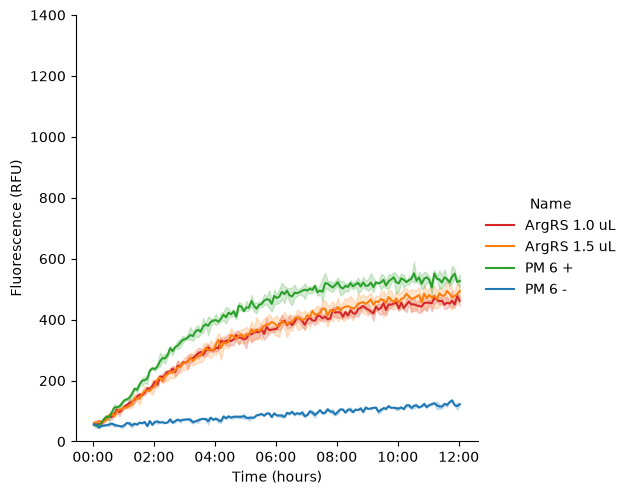
Figure 12:Translation kinetics of PURE system show the behavior of the system with the addition of two different volumes of ArgRS as described in Table 5. Measurements are in triplicate and represent 95% confidence intervals.
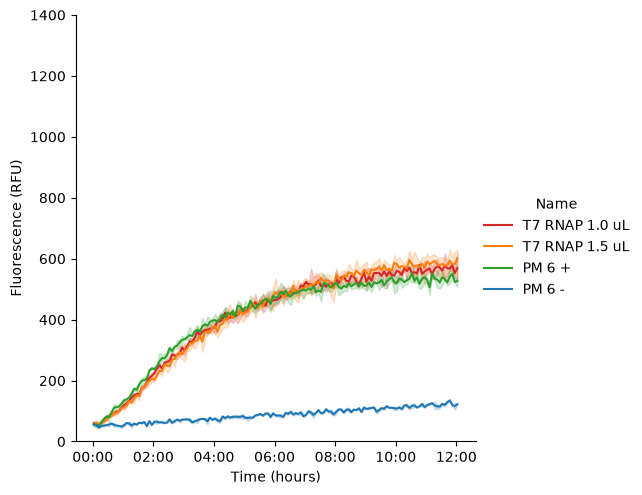
Figure 13:Translation kinetics of PURE system show the behavior of the system with the addition of two different volumes of T7 RNAP as described in Table 5. Measurements are in triplicate and represent 95% confidence intervals.
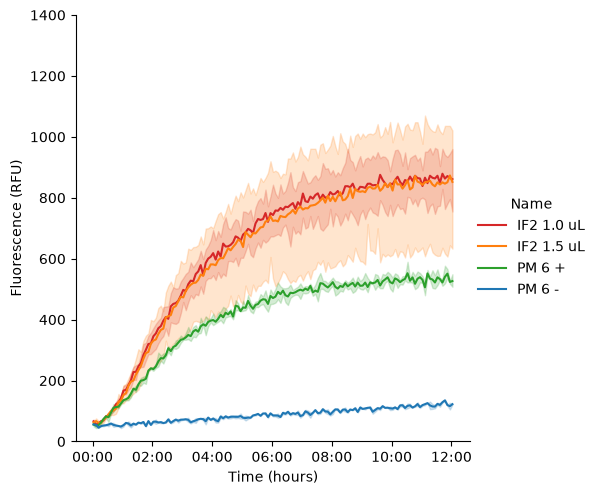
Figure 14:Translation kinetics of PURE system show the behavior of the system with the addition of two different volumes of IF2 as described in Table 5. Measurements are in triplicate and represent 95% confidence intervals.
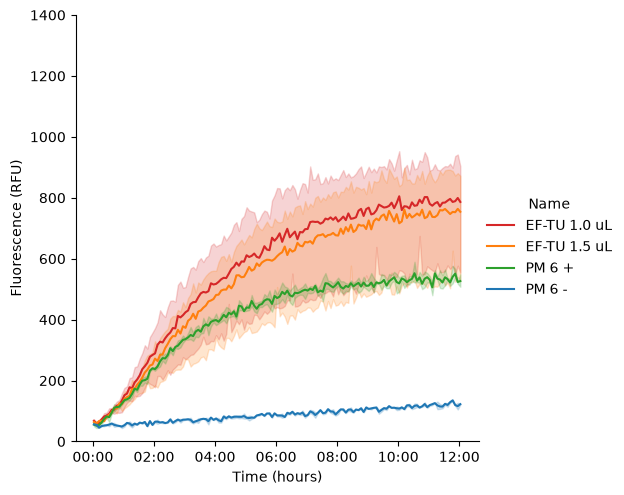
Figure 15:Translation kinetics of PURE system show the behavior of the system with the addition of two different volumes of EF-TU as described in Table 5. Measurements are in triplicate and represent 95% confidence intervals.
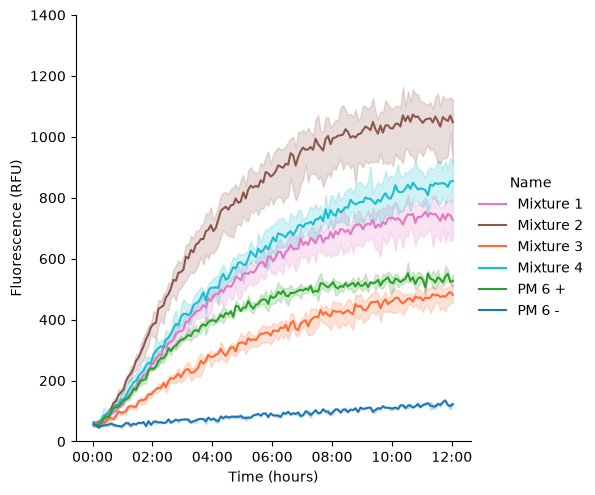
Figure 16:Translation kinetics of PURE system show the behavior of the system with the addition of 4 different combinations of proteins as described in Table 5. Measurements are in triplicate and represent 95% confidence intervals.
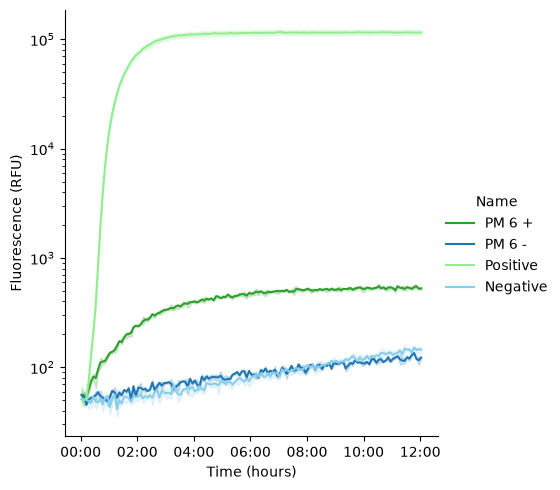
Figure 17:Translation kinetics of PURE system show the behavior of participant protein mix (PM 6) relative to commercially-available controls as described in Table 5. Measurements are in triplicate and represent 95% confidence intervals.
Buffer poisoning
In a second troubleshooting experiment, we hypothesized that a contaminant in the buffer system might be inhibiting the transcription-translation reaction. To test this hypothesis, we added 2.5 μL of participant protein mix (PM 2 and 6) to a standard PURE reaction. Under normal conditions, adding functional proteins should have minimal impact on PURE reaction performance. However, the presence of contaminants, such as residual imidazole from protein purification, could dramatically impair activity. The addition of participant protein mix resulted in a severe reduction in performance compared to the positive control Figure 19, strongly suggesting that an inhibitory component in the buffer system is responsible for the poor performance of the participant protein mixes.
Table 6:Description of experimental parameters.
| Name | Description |
|---|---|
| PM 2,6 | Standard NEB PURExpress reaction with plamGFP supplemented with 2.5 uL of protein mix from participants 2 and 6 |
| Positive | Standard NEB PURExpress reaction with plamGFP |
| Negative | Standard NEB PURExpress reaction without plamGFP |
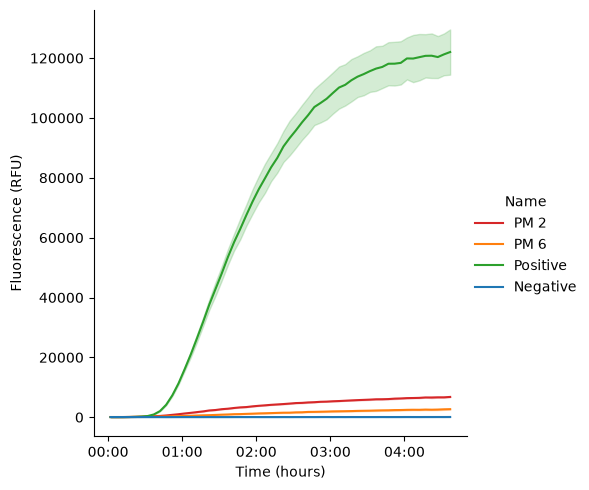
Figure 18:Translation kinetics of PURE system reactions comparing control PURE reactions with those containing 2.5 uL of workshop participants’ protein mix as described in Table 6. The graph shows plamGFP fluorescence measurements over time. All reactions have the same final volume. Measurements are in triplicate and represent 95% confidence intervals.
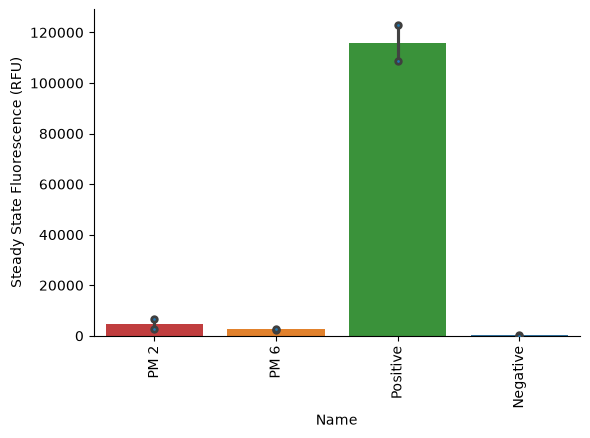
Figure 19:Steady state fluorescence measurements of PURE system comparing control PURE reactions with those containing 2.5 uL of workshop participants’ protein mix as described in Table 6. All reactions have the same final volume. Measurements are in triplicate and error bars represent standard error.
General reflections
Participant Reflection Summary
Collaboration and knowledge sharing were highly valued. Attendees appreciated exchanging research interests, discussing technical approaches with experts, and learning from others’ experiences with different protocols and methodologies.
Practical troubleshooting skills were emphasized. The workshop provided opportunities to learn debugging approaches for when experiments don’t work as expected, with participants gaining confidence in identifying and addressing common purification problems. This combination of knowledge and troubleshooting skills will help participants recreate functional PURE systems in their home labs, though they acknowledged it would still take time to achieve full functionality.
Advanced applications and optimization strategies were explored. The day included work on GUV-encapsulated PURE experiments and discussions about systematic approaches to identify key limiting factors, with some participants considering ambitious parameter space optimization approaches for future work.
Organizer Reflections
Back to Basics. The variation in results across participants suggests significant differences in reagent handling techniques, this was most on display in the preparation of the Energy Mix Figure 3. Future workshops should place greater emphasis on the mechanics of reagent handling and reaction assembly to ensure more consistent outcomes across all participants or otherwise better understand the most important factors for variations
Set Appropriate Expectations. We initially planned for a typical 9am-5pm working day, but making PURE is inherently complex and time-intensive. Several of the workshop days ran significantly longer than expected. Moving forward, we should establish realistic timeframes from the outset, communicating extended schedules clearly to both participants and facilitators. In general, everyone was happy to work long hours but setting that expectation from the start would have made the effort easier.
Frontload Digital Training. We decided relatively late to demonstrate open science workflows, including real-time data analysis, curation, and Developer Note creation. This decision reflected our belief that communicating and documenting science is as important as conducting it, and recent developments in Nucleus collaboration tools made this goal just within reach. For future workshops, we should introduce digital tools and workflows remotely before participants arrive, freeing up valuable in-person time for hands-on data curation and collaborative writing rather than basic tool orientation.
Build in Daily Reflection. Implementing daily writing and data curation sessions, combined with more frequent reflection periods, would strengthen both learning outcomes and better science. Regular check-ins help identify issues early and maintain momentum throughout the workshop.
Design for Flexibility. We pre-planned experiments assuming successful outcomes. In the case of making Protein Mix, we had thoughtfully prepared platemaps in advance that would have enbaled straightforward data analysis and curation. However, when the Protein Mix required debugging involving on-the-fly experimental design, the need to generate additional platemaps and curate significantly more data than anticipated stretched our resources thin, causing some important details to fall through the cracks. At the same time, the need for collaborative and creative problem solving was a highlight of the workshop The debugging process provided an excellent context for surfacing small but critical details that led to a better understanding of the PURE system for the participants. Future workshops should build in contingency time and flexible protocols to accommodate both successful and challenging experimental outcomes.
Conclusions
Workshop Achievement: Eight participants from three continents successfully built complete PURE systems from scratch in five days using open protocols, with three of four components (energy mixes, tRNAs, ribosomes) performing near commercially-available benchmark levels.
Key Technical Finding: Buffer contamination, not protein quality, was the primary barrier—just 1μL of participant protein preparations reduced commercially-available PURE activity by 90-95%, providing crucial insights for future system optimization.
Impact on Field: This collaborative approach reduced typical PURE system startup times from 9 months-2 years to days, while building a community of practitioners equipped to implement these systems in their home laboratories using open science practices.
Participants of the Nucleus OnePot PURE Workshop: Adriana Hudyma (University of Minnesota), Hanqiao Zhang (California Institute of Technology), Jake Stillson (Stanford University), Parsa Parivizian (University of Michigan), Riku Nagai (University of Florida), Severine Cazaux (Pontificia Universidad Católica de Chile), Tyler Goshia (J. Craig Venter Institute), Viktoriia Belousova (Max Planck Institute for Biochemistry). We thank Charlie Newell (University College London), Evan Kalb (University of Minnesota), and Matas Deivikis (Imperial College London) for participating in the Nucleus OnePot PURE Development Workshop that took place from March 31 - April 4, 2025 and served as a prototype for this larger event. We thank The Astera Institute and Build-A-Cell for financial support.